Citrine (黃水晶): Meaning, Chinese Name & How to Wear It
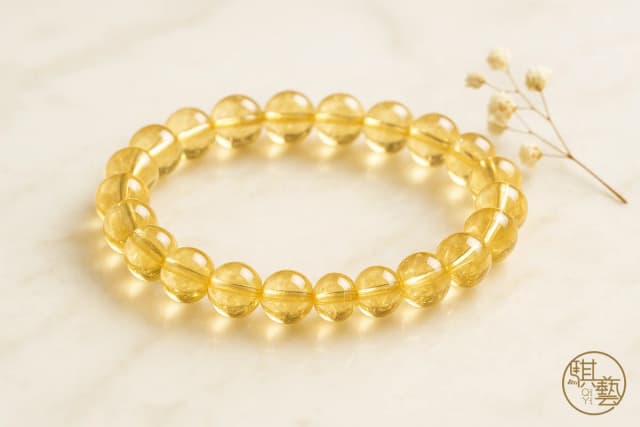
黃水晶 · A warm lemon glow — the classic symbol of steady wealth and abundance
Short answer: citrine in Chinese is 黃水晶 (simplified 黄水晶, huáng shuǐ jīng), literally “yellow crystal”. Yellow is a wealth colour in Chinese custom, which is why it is a popular gift.
Ordering from Singapore, Malaysia or Hong Kong? Local buying guides: Singapore · Malaysia · Hong Kong
Build a bracelet from your birth chart: enter your birth date, see your five elements, and we hand-string the matching beads in Taichung. How it works: Chinese birth chart (BaZi) bracelet · five elements bracelet
🛍 Citrine bracelets — in stock & made to order
Ready-to-ship pieces below. Want a different bead size, wrist size or a mix of stones? Build your own in the design tool — live pricing, handmade in Taiwan, 7–14 working days.
🇹🇼 Citrine in Chinese
- Traditional
- 黃水晶
- Simplified
- 黄水晶
- Pinyin
- huáng shuǐ jīng
- Literally
- “yellow crystal”
Yellow and gold are the wealth colours in Chinese custom, making 黃水晶 the standard 招財 (zhāo cái, “inviting wealth”) stone. Note that in Chinese-language shops the term covers heat-treated material as well, so it is worth asking whether a piece is 天然 (natural) or 加熱 (heated).
See all 50 → Crystal names in Chinese
✨ Meaning & symbolism
In Chinese folk tradition citrine is practically shorthand for “honest wealth” — the kind earned steadily through your own work. Its warm golden tone is associated with abundance and a stable, gradual building of prosperity; where rutilated quartz has a bold, commanding “big money” image, citrine is more the slow-and-steady stream. It's also November's birthstone and a safe, welcome choice for business gifts.
📖 Origin & cultural background
Natural citrine is genuinely scarce, mined mainly in Brazil and Madagascar. Most citrine on the market is amethyst that's been heat-treated to shift its colour, so a natural, unenhanced stone — a hazy lemon shade — is worth considerably more.
🤲 Which hand do you wear Citrine on?
Folk custom has it worn on the left hand to draw in honest wealth. There's no hard rule.
🧼 Cleansing & care
It's a 7 on the hardness scale. Like amethyst it will fade with prolonged sun exposure, so store it away from harsh light.
❓ Frequently asked questions
What are the benefits of citrine?
In folk symbolism citrine represents honest wealth, abundance and steady accumulation. Crystals have no scientifically proven effects — there's no such thing as “wear it and get rich.” It's simply a warm keepsake that reminds you to manage your money sensibly and stay focused on your work.
What's the difference between natural and colour-treated citrine?
Most citrine sold is amethyst that's been heated to change colour (a deeper orange-brown tone), while natural citrine is a clear, delicate lemon yellow and is both rarer and pricier. Both are genuine crystal, but they differ in value.
Which hand should I wear citrine on?
Folk custom favours the left hand, to invite in wealth.
How do I ask a Chinese-speaking seller whether citrine is heated?
Ask whether the 黃水晶 (huáng shuǐ jīng) is 天然 (tiān rán, natural colour) or 加熱 (jiā rè, heated). In Chinese-language shops 黃水晶 covers both, and most deep orange-brown pieces are heat-treated amethyst. Both are real quartz; the difference is rarity and price, so it is a fair question to ask before you buy.
⚠️ Crystals are natural mineral jewellery. This page shares folklore and stone knowledge; crystals have no scientifically or medically proven effects and are not a substitute for medical care. What we value is their meaning, companionship and sense of ritual.