
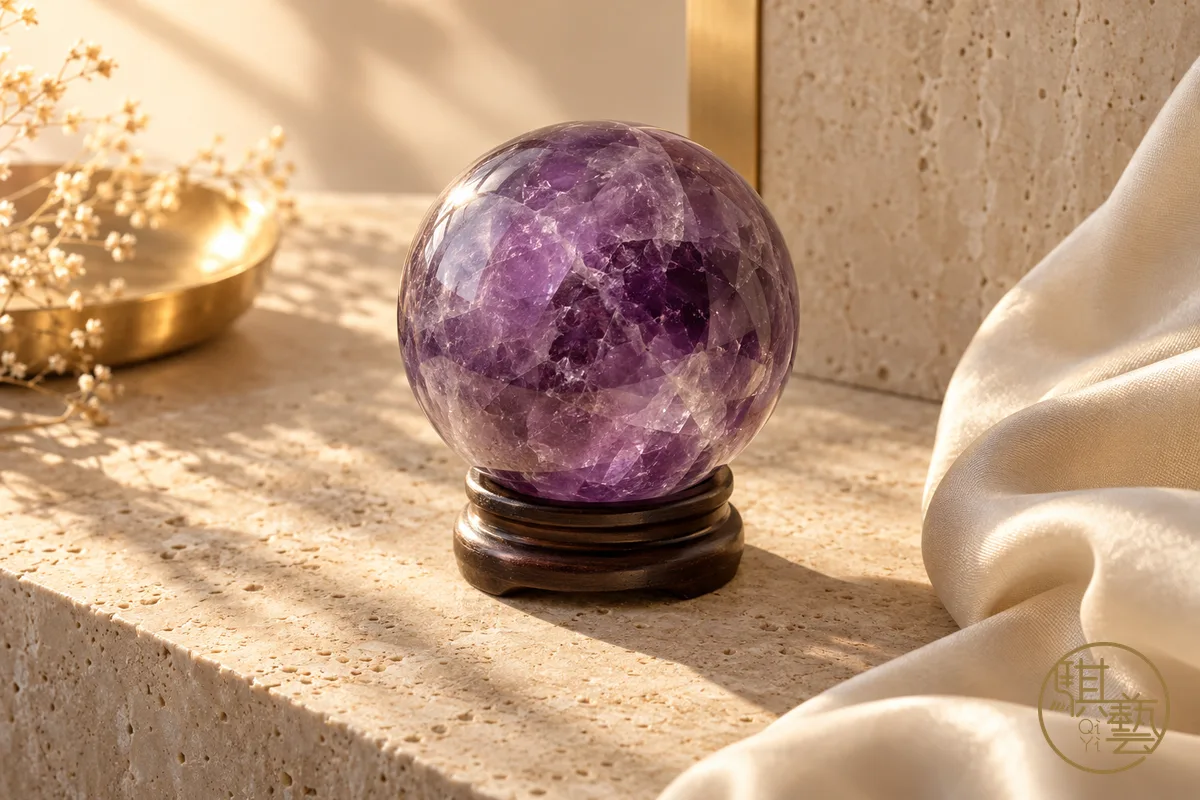
What Is Amethyst? The Short Answer First
Amethyst is the most widely known member of the quartz family. With the chemical formula SiO2, it owes its layered range of color, from pale lilac to deep grape purple, to trace amounts of iron (Fe3+). At a Mohs hardness of 7, it holds up well to everyday wear. Whether as jewelry, a display piece, or a companion for quiet meditation, amethyst's distinctive tone and rich cultural background have made it one of the most beloved natural stones in the world.
The Meaning of Amethyst in Lore
Western Tradition: Clarity and a Sober Mind
The word "amethyst" comes from the ancient Greek *amethystos*, meaning "not intoxicated." The ancient Greeks believed that placing amethyst in a wine cup or wearing it could help keep the mind clear and guard against acting on impulse. In medieval Europe, amethyst often appeared in bishops' rings and royal crowns, symbolizing steady judgment and a noble character.
Eastern Culture: Calm and Focus
Across East Asian cultures, purple has long been linked with wisdom and spiritual seeking. Amethyst is a familiar presence in meditation spaces, studies, and offices, symbolizing a settled mind and clear thoughts, which is why so many people like to keep it nearby while reading or working.
As a Birthstone
Amethyst is the birthstone for February and the gemstone for the 17th wedding anniversary, making it a popular keepsake gift for friends and loved ones.
Amethyst's Mineral Traits and Origins
| Property | Detail |
|---|---|
| Chemical composition | SiO2 (with trace Fe3+) |
| Mohs hardness | 7 |
| Crystal system | Trigonal |
| Refractive index | 1.544-1.553 |
| Main sources | Brazil, Uruguay, Zambia, South Korea, Madagascar |
Brazil has the largest output, with colors ranging from light to medium purple; Uruguay is known for its rich, deep purple, often found in geodes; and amethyst from Zambia carries a bluish-purple tone that the trade regards as one of the higher-quality types.
How to Tell Whether Amethyst Is Natural
Look at the Color Distribution
Natural amethyst is usually uneven in color, with visible color banding (color zoning) or areas of varying depth inside. If a stone is uniformly saturated throughout, be cautious that it may be synthetic (such as hydrothermally grown amethyst) or dyed quartz.
Check the Inclusions
Under high magnification, natural amethyst shows natural fractures, gas-liquid inclusions, or tiny mineral inclusions, all traces of natural growth. Synthetic material is usually too clean inside.
Feel the Temperature
Natural crystal conducts heat well and feels cool to the touch at first, while glass imitations warm up more quickly. This can serve as a supplementary clue, but it cannot fully replace professional appraisal.
To make sure you're buying natural amethyst, choose a trustworthy brand that provides source information, and ask about the stone's origin and any treatments before purchasing.
How to Cleanse and Care for Amethyst
Common Cleansing Methods
- Moonlight cleansing: place the amethyst on a windowsill or outdoors and let it bathe in moonlight overnight, the gentlest and most beloved method.
- Smoke cleansing (smudging): waft sage or agarwood smoke around the stone, a ritual-style cleansing rooted in Indigenous American and Eastern traditions.
- Sound cleansing: surround the stone with the vibrations of a singing bowl or tuning fork, ideal when water or fire isn't convenient.
Care Practices to Avoid
- Prolonged sun exposure: amethyst's color comes from iron, and long exposure to strong UV light can cause it to fade, so avoid placing it on a windowsill in constant direct sun.
- Acidic or corrosive liquids: although a Mohs hardness of 7 suits everyday wear, still keep it away from bleach, perfume, and strong acids.
- Ultrasonic cleaners: if the stone contains fractures, ultrasonic vibration can accelerate crack propagation.
Amethyst Bracelet Pairing Ideas
Color Pairing Principles
Amethyst's purple tone forms a complementary or harmonious effect with the following stones:
- Clear quartz: neutral and transparent, it highlights amethyst's color for a fresh, understated look.
- Rose quartz: a warm-tone echo, the two together bring a soft, sweet layering.
- Black tourmaline: deep and steadying, it forms a light-and-dark contrast with amethyst for real visual weight.
- Moonstone: with its blue-white glow, it lends amethyst a mysterious, elegant atmosphere.
Choosing Metal Accents
Amethyst is most classic with silver-tone metals (925 sterling silver, white gold, titanium steel); those who prefer a warmer feel can try rose gold, which melts into the purple for a romantic touch.
Occasion Suggestions
Pale purple beads suit everyday office wear or casual commuting, while a deep grape-purple pendant or geode display piece is better suited to formal occasions or home decor as a visual focal point.
4 Key Points for Buying Amethyst
- Color: personal preference comes first. The trade values medium to deep purple more highly (called "Deep Siberian" or "AAA grade"), but pale purple ("Rose de France") carries its own cultural beauty.
- Transparency: the more transparent the crystal and the more evident the fire, the higher the quality generally, though hazy round beads or rough stones have their own distinct aesthetic.
- Cut and polish: check whether the facets are symmetrical and the polish is fine, both of which affect the overall luster.
- Source information: a trustworthy brand should be able to tell you the origin and disclose whether the stone has been heat-treated (heating turns amethyst into citrine, which doesn't affect its natural status but must be disclosed).
In Closing
With its centuries of cultural depth, its ever-changing purple beauty, and its approachable hardness and availability, amethyst has become the first stone many people collect as they step into the world of natural crystals. Understand its traits, care for it well, and let every amethyst be a lasting companion in daily life.
To learn more about the stones that suit you, try our free AI BaZi calculation: enter your birth date and the AI works out your Five Elements balance and suggests a crystal combination. There is no human fortune-teller behind it; it is an AI calculation you can adjust bead by bead.