In one line: tea quartz leans warm brown, smoky quartz leans cool grey; they have different causes and different moods
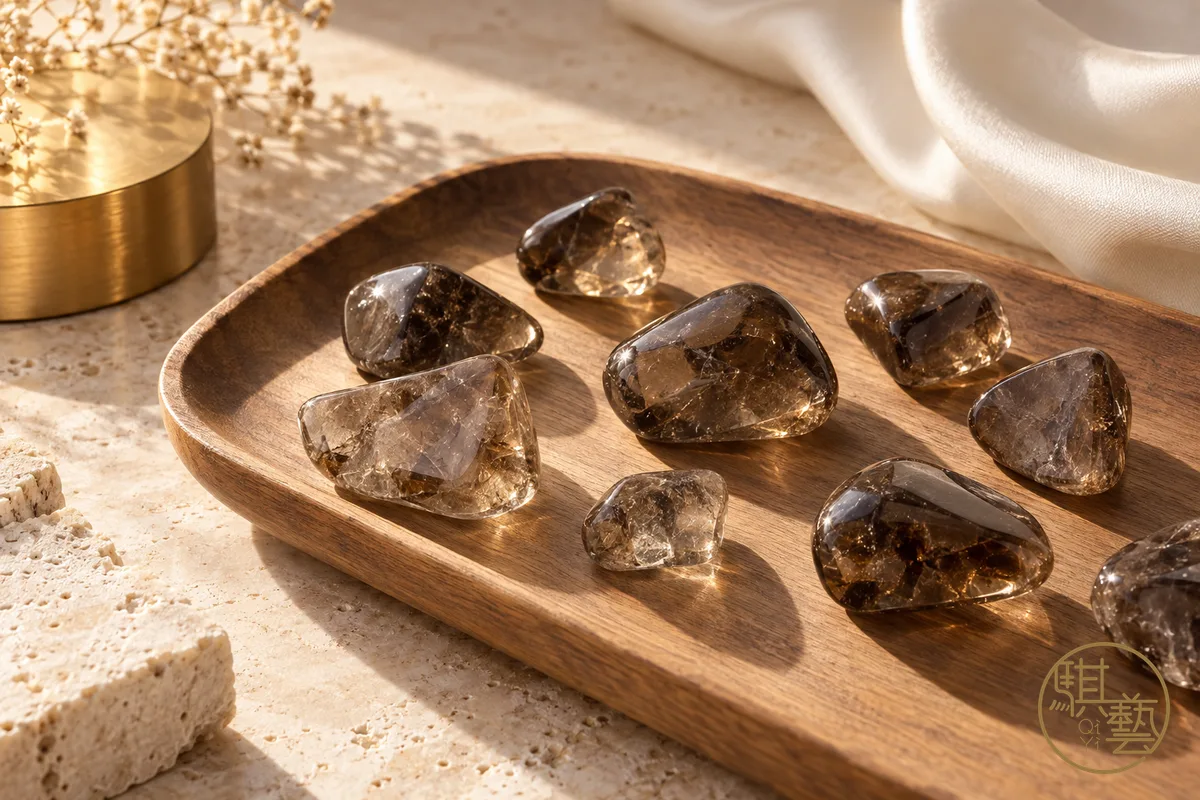
Tea quartz (the lighter, warm-brown variety of Smoky Quartz, sometimes called brown quartz) and smoky quartz (the darker variety of Smoky Quartz) are often confused on the crystal market. But once you grasp two dimensions, "warm versus cool tone" and "how light passes through", you can tell them apart quickly. Tea quartz has a warm honey-brown, amber-brown cast; smoky quartz shows a cooler greyish-brown, deep smoky colour, and the darkest pieces come close to black.
What is tea quartz? A look at its basic properties
Appearance and colour
In the Taiwan market, tea quartz usually refers to quartz with a warm brownish-yellow to amber-brown colour. It has good translucency overall and often glows with a honey-like warm light under lamps. Some dealers also call it "brown quartz" or "yellow smoky quartz"; naming conventions vary by region.
Mineralogical background
- Mineral species: quartz (SiO2)
- Hardness: Mohs 7
- Common sources: Brazil, Madagascar, Yunnan in China
- Cause of colour: trace iron (Fe3+) ions and natural radiation acting together to produce the warm brown tone
Cultural meaning
In Eastern culture, tea quartz is often associated with imagery of being "steady, reserved and grounded". Its warm, gentle brown tone brings the earth to mind, making it well suited to people who value the texture of everyday life and prefer an understated aesthetic.
What is smoky quartz? The three key differences from tea quartz
Appearance and colour
Smoky quartz has an overall cool, grey-leaning tone, ranging from light smoky grey to deep ink-brown. Top-grade dark smoky quartz can even reach the near-black colour of "morion", retaining its distinctive smoky quality even when light passes through.
Mineralogical background
- Mineral species: quartz (SiO2)
- Hardness: Mohs 7
- Common sources: Scotland (the Cairngorm Mountains), Brazil, the Swiss Alps, Colorado in the USA
- Cause of colour: aluminium (Al3+) substitutes for silicon, and exposure to natural gamma radiation forms a colour centre, producing the cool grey smoky colour
Cultural meaning
Smoky quartz has a long record in Western mineralogy, and Scotland regards it as one of its national stones. Its calm, smoky-grey tone often carries an "urban, composed, rational" visual language in modern jewellery design, suiting minimalist or industrial styling.
Tea quartz vs smoky quartz: one table to see the differences
| Comparison | Tea quartz | Smoky quartz |
|---|---|---|
| Tone | Warm brown, honey-brown, amber-brown | Cool grey, smoky brown, deep ink-grey |
| Translucency | Higher translucency, warmer light | Deeper feel, with a smoky quality |
| Main cause of colour | Iron ions + natural radiation | Aluminium substitution + gamma-ray colour centre |
| Mood | Earth, gentle warmth, steadiness | Urban, composed, understated luxury |
| Common sources | Brazil, Madagascar | Scotland, Brazil, Switzerland |
| Hardness | Mohs 7 | Mohs 7 |
Styling tips: how to choose what suits you
Choose by your outfit style
Tea quartz suits:
- Earth-tone outfits (khaki, caramel, milk-tea shades)
- Vintage, bohemian and Japanese natural styles
- Mixing with warm-toned crystals such as moonstone, strawberry quartz and rose quartz, for rich layering without clashing
Smoky quartz suits:
- Black-white-grey minimalist outfits or industrial style
- Pairing with cool-toned minerals such as obsidian, labradorite and deep-blue iolite for an understated, luxurious feel
- Working especially well with metallic accents (silver, grey-gold and so on)
Choose by the mood you prefer
If you like feeling a kind of "grounded, earth-wrapped steadiness" when you wear a piece, tea quartz's warm brown translucency comes closer to that experience; if you prefer a "quiet, thought-settling" visual mood, smoky quartz's deep smoky-grey tone often resonates more with that inner state.
A gentle reminder from Qi Yi Crystal: when choosing crystal jewellery, beyond colour, it is worth observing how the tone shifts under natural light and indoor lighting. Seeing it with your own eyes is the only way to find the one piece that truly speaks to you.
Care: identical for both, and easy to follow
Tea quartz and smoky quartz both belong to the quartz family, so they are cared for the same way:
- Cleaning: wipe gently with a soft cloth dampened with clean water. Avoid ultrasonic cleaners and strong chemical cleaners.
- Avoid prolonged sun: long-term intense UV may fade the colour, so keep the piece somewhere shaded after wearing.
- Store separately: although the hardness reaches Mohs 7, it is still best to store it apart from other jewellery to avoid scratches.
- Check the fittings regularly: if the bracelet's elastic cord or metal fittings show signs of ageing, replace them promptly.
Quick summary
Tea quartz and smoky quartz are both natural members of the quartz family with the same hardness, but they each have their own colour, colouring mechanism and visual mood. Tea quartz leans warm and suits earth-tone styling; smoky quartz leans cool and suits minimalist, urban looks. Before you buy, decide first whether you want a warm or cool tone, then match it to your everyday style, and you will find the dark-toned crystal companion that suits you best.