
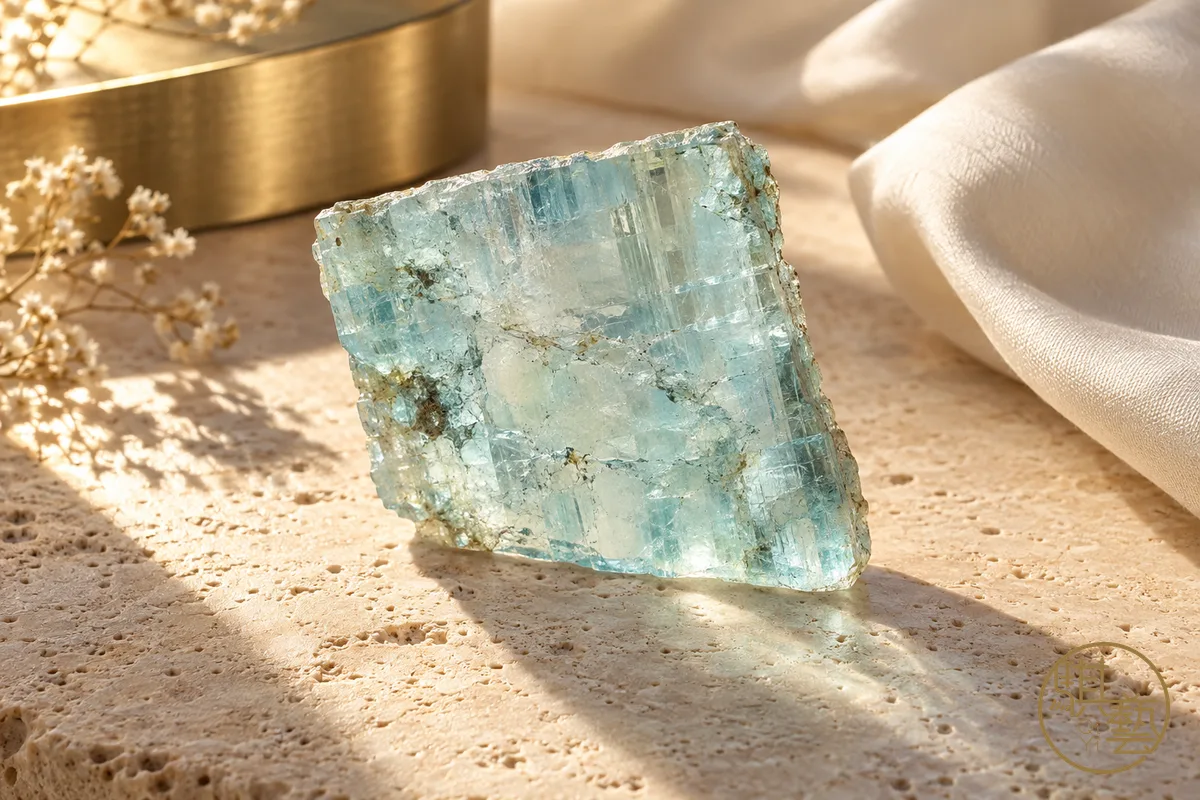
With its richly layered blue tones like ocean water, the aquamarine bracelet is one of the most recognizable choices in the natural-stone bracelet market. If you're considering getting one, this article will help you build a complete buying sense, from the basics and key selection points to pairing suggestions and care.
What Kind of Stone Is Aquamarine? Meet the "Stone of the Sea"
Aquamarine is a member of the beryl family, the same mineral species as emerald, with the chemical formula Be3Al2Si6O18. Its blue color comes from the coloring mechanism of iron ions (Fe2+/Fe3+), and with a Mohs hardness between 7.5 and 8, it's a relatively wear-resistant stone for everyday wear.
Its main sources include:
- Brazil (Minas Gerais state): the largest output, with a wide color range
- Pakistan and Afghanistan: high-altitude crystals with fine transparency and an icy-blue tone
- Madagascar: an important source that has risen in recent years, with consistently good saturation
- Xinjiang, China: a region familiar to domestic collectors and a common source of beads
The root of "aquamarine" comes from the Latin *aqua marina*, meaning "seawater," which is why cultures across the world have long regarded it as a symbolic stone of clear communication and a calm mind.
How to Choose an Aquamarine Bracelet: 4 Key Indicators
1. Color: Deeper Isn't Always Better, Evenness Matters Most
Aquamarine's color ranges from the palest icy blue and sky blue to saturated deep-sea blue. The top grade is called "Santa Maria" blue, named after the Santa Maria de Itabira mine in Brazil, and is characterized by saturation with a slight green cast.
When choosing a bracelet, observe it in natural light:
- How high is the color consistency across the whole strand
- Whether there's an obvious color "break" (beads of noticeably different depths strung together)
- Whether there's a gray cast, which makes a stone look dull and usually indicates lower quality
2. Transparency: See How Light Passes Through the Bead
Natural aquamarine is commonly transparent to semi-transparent, and some contain natural "rutile needle" inclusions that create a velvety sheen, a precursor to what's known as the cat's-eye effect. If you prefer a clear look, choose beads with few inclusions; if you like a natural feel, beads with a misty quality have their own charm.
3. Bead Shape and Size: Wrist Proportion Matters
Common bead diameters are 6mm, 8mm, and 10mm. Those with slimmer wrists (14cm or less) are best starting with 6-8mm for a more balanced look. Beyond round beads, there are faceted cuts that refract a shimmer like sunlight on water, ideal for those who love a refined style.
4. Whether It Has Been Heat-Treated
Most aquamarine on the market has been heat-treated to remove yellow-green tones and make the blue purer. This is a recognized routine practice in the trade and does not affect the stone's mineral properties. If a seller emphasizes that a stone is "unheated," you can ask for a certificate as supporting proof.
How to Style an Aquamarine Bracelet: 3 Combination Ideas
Combination One: Fresh and Pure x Clear Quartz
Aquamarine plus clear quartz creates a minimalist, crystal-clear look that reads light and airy, ideal for daily commuting or the office. The way clear quartz refracts light makes aquamarine's blue stand out even more.
Further reading: The Clear Quartz Bracelet Pairing Guide
Combination Two: Ocean Getaway x Labradorite
Aquamarine and labradorite are both stones with a mysterious shimmer, and paired together, their blend of blue and green sheen evokes tropical seas. Ideal for those who love a look with personality.
Combination Three: Gentle Contrast x Rose Quartz
Blue and pink tones form a soft contrast in hue. Aquamarine's cool clarity paired with rose quartz's warm, tender texture strikes a balance in both look and mood, a popular double-wrist stacking combination.
Further reading: Choosing and Pairing a Rose Quartz Bracelet
Everyday Care Essentials for an Aquamarine Bracelet
Although aquamarine is hard, keep these points in mind:
- Avoid prolonged sun exposure: strong UV light can gradually fade the color, an effect that's even more noticeable on heat-treated stones
- Avoid contact with chemicals: perfume, alcohol sprays, dish soap, and other chemicals can erode the surface luster of the beads
- Cleaning method: gently wipe with water and a mild soap; avoid ultrasonic vibration cleaning (which can loosen the elastic cord knot)
- Storage tip: store separately in a cloth pouch or a compartment of a jewelry box to avoid scratching against other pieces
A Cultural View on Aquamarine and BaZi / Chinese Metaphysics
In Eastern metaphysical culture, aquamarine, with its water-attribute tone, is often seen as a stone that resonates with the "water" element and is sometimes referenced as a pairing suggestion in consultation services. These connections stem from cultural context and personal psychological resonance, and serve as a supportive medium for self-exploration rather than a determinant of fate.
If you're interested in how to choose a crystal bracelet based on your personal BaZi attributes, you're welcome to try our free AI BaZi calculation, which works out your elements and suggests stones automatically.
Free AI BaZi Crystal Pairing Tool Browse Crystal Bracelets by Category
Choosing an aquamarine bracelet that truly suits you starts with understanding the stone. We hope this guide gives you more confidence before you buy, rather than an impulse purchase driven only by a pretty color.